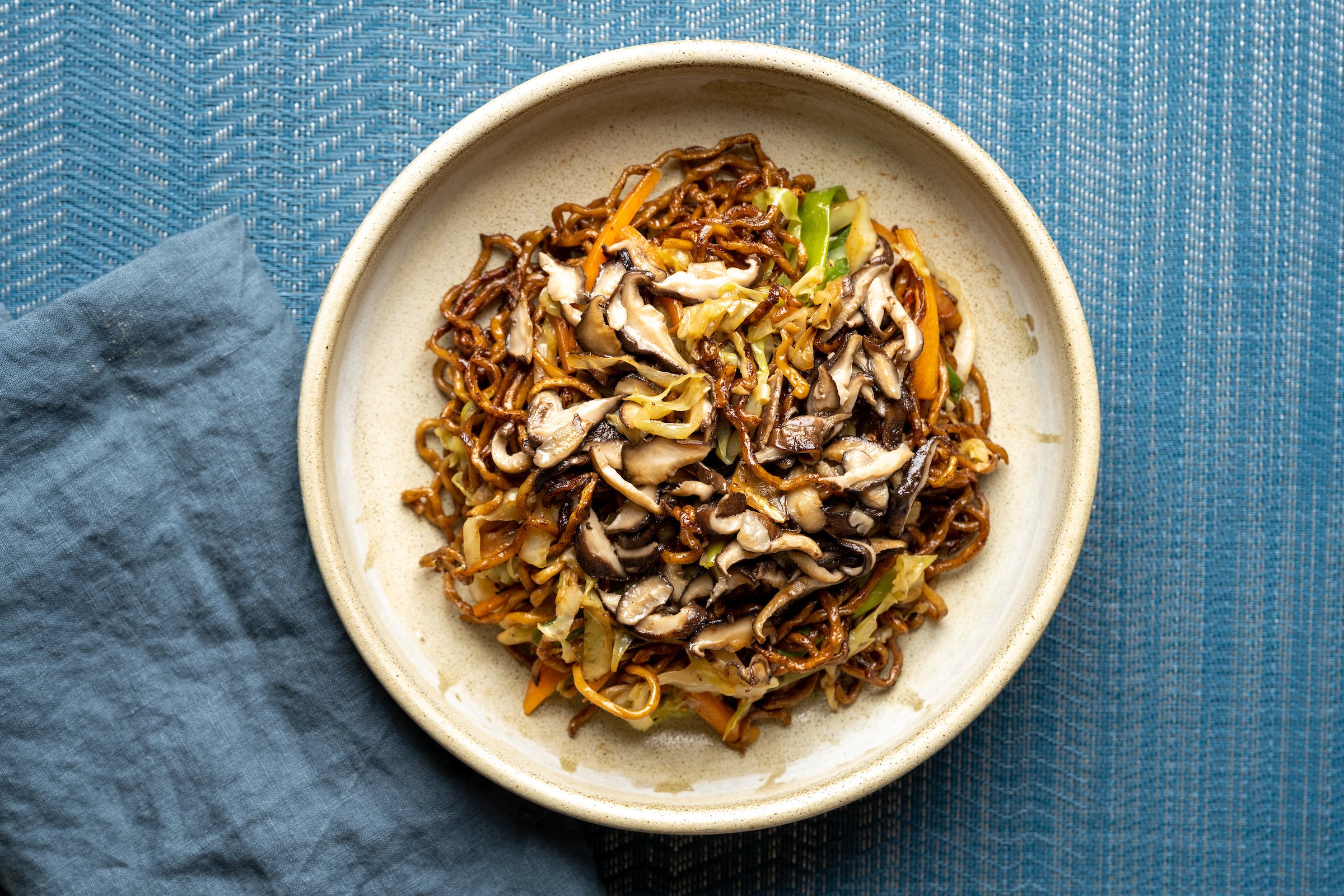
Whole Grain Yakisoba Stir-Fry Noodles
“I need these in my life.” – 3rd grader
“Whoever cooked this is a genius.” – 5th grader
We developed a yakisoba noodle to meet federal school nutrition guidelines and for ease preparing in large quantities. Our first customer was Portland Public Schools, where they were a huge hit with kids. Since then, our yakisoba has been served by more than two dozen Oregon school districts as well as in award-winning Portland restaurants including Oma’s Hideaway and Rangoon Bistro.

Food Management Magazine named our collaboration with Portland Public Schools one of the “best school lunches in the nation. The noodles won a Good Food Award in 2023. We use organic whole grain durum and Edison flours from Camas Country Mill in Junction City, Oregon. Our yakisoba has great chewiness and flavor. We boil, chill, and oil the noodles before packing, so all you have to do is roast them in an oven or pan-fry them!
Size: 5-pound bag
Case Pack: 4 bags / 20 pounds total
Serving Size: 4 ounces (20 servings per bag)
Shelf Life: Freezer: 12 months. Refrigerator after thawing: 14 days (379 days total)
Handling: Must slack fully for 5 to 7 days before cooking. Noodles must be reheated before serving for best texture and flavor.
Attributes: Whole grain rich; vegan and vegetarian; made in Portland, Oregon; parcooked for fast, simple preparation
Distribution: Delivered frozen. We work with two distributors.
US Foods: 5934293
Sysco: 7342031
Ingredients: Whole Grain Wheat Flour* (Whole Grain Durum Flour*, Whole Wheat Flour*), Unbleached Enriched Flour* (Wheat*, Niacin, Iron, Thiamin Mononitrate, Riboflavin, Folic Acid), Water, Soybean or Salad Oil, Vital Wheat Gluten, Salt. *Organic. Contains: Wheat, soy.
Flour Sourcing: We purchase enriched wheat flour from employee-owned Central Milling in Utah. We purchase whole grain durum and Edison flours from Camas Country Mill in Junction City, Oregon.
Allergens processed in the same facility as Umi yakisoba sauce: wheat and soy (updated March 2025).
Sales: Please write to us at sales@umiorganic.com.
Resources:
Spec Sheet
Product Formulation Statement - Schools
Recipe for Yakisoba for Schools

Organic Yakisoba Sauce

The only sauce of its kind that is Certified Organic!
A deeply flavorful sauce. A little sweet (as yakisoba sauce should be), with less sugar than its competitors and a strong tamarind note that keeps it from being cloying. Our yakisoba sauce is a perfect match for noodles and also wonderful for teriyaki chicken, tofu, okonomiyaki, and other stir-fries. It includes Oregon apple puree for rounded sweetness, tamarind for tang, and Oregon-made tamari and Worcestershire sauce for savory depth. We took inspiration from the history of yakisoba sauce, which brought together the spirit of chow mein, British Worcestershire, and fruits. The sauce won a Good Food Award in 2023.
Size: 11.8 oz
Case Pack: 6 bottles
Serving Size: 2 tablespoons / 12 servings per bottle
Shelf Life: 2 years
Attributes: Certified organic, no preservatives or artificial flavors, gluten free, vegan, vegetarian
Distribution: Chef’s Warehouse
Ingredients: Gluten-free Tamari Soy Sauce* (water, soybeans*, salt, alcohol*), Brown Sugar* (evaporated cane sugar*, blackstrap molasses*), Worcestershire Sauce* (blackstrap molasses*, apple cider vinegar*, tamari*, water, white distilled vinegar*, tamarind paste*, sea salt*, yellow mustard powder*, garlic granules*, ginger root powder*, cayenne pepper*, cumin seed*, cloves*, lemon juice*, natural flavor*, guar gum*), Apple Puree*, Tamarind Paste*, Onion Powder*, Sea Salt, Ginger Powder*. *Organic. Contains: Soy.
Allergens processed in the same facility as Umi yakisoba sauce: Dairy, eggs, fish & shellfish, sesame, soy (also an ingredient), tree nuts, wheat (updated October 2022).


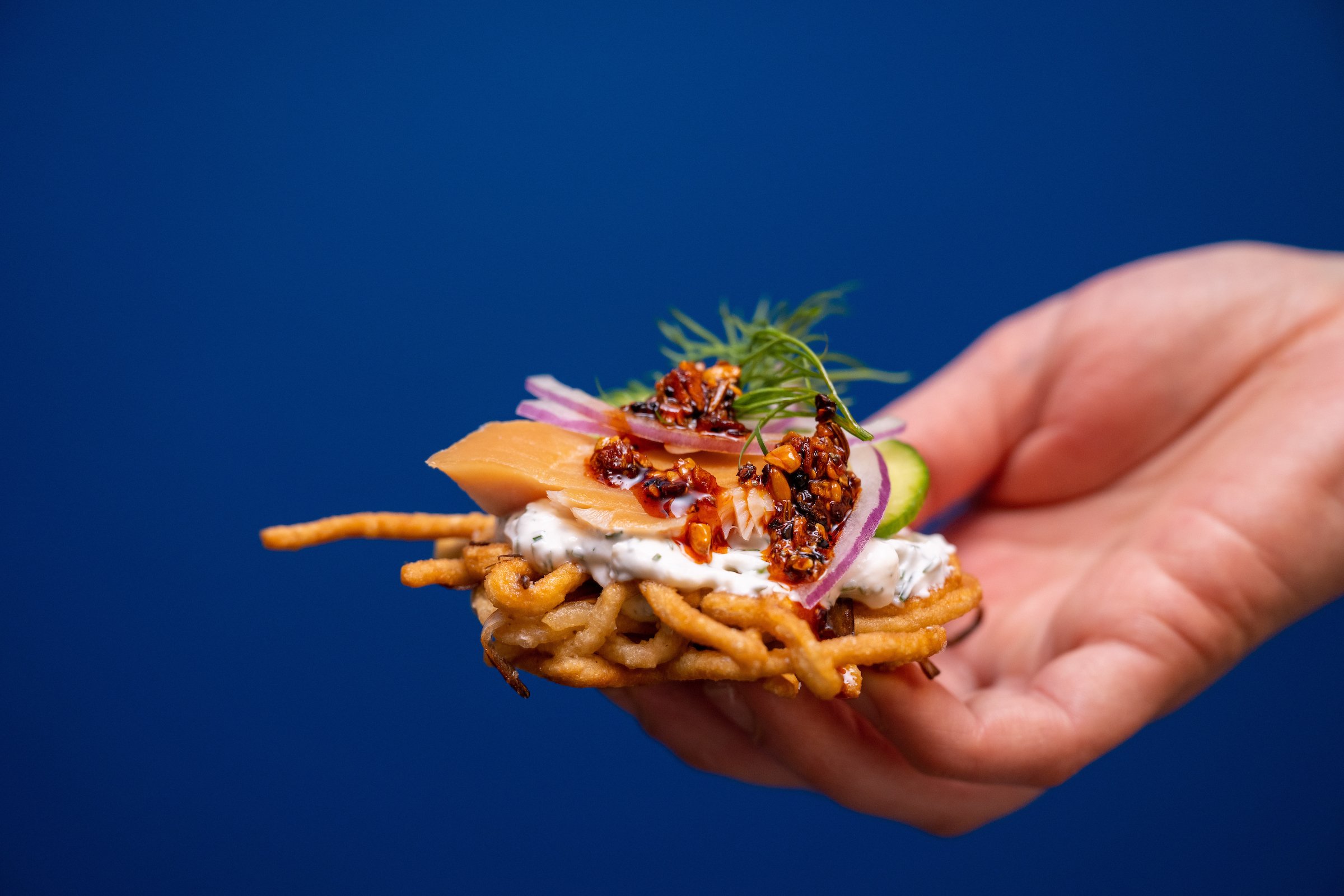

I was delighted when I experimented by using our Organic Yakisoba Sauce in place of classic Otafuku or Bulldog Okonomiyaki Sauce. It works like a dream! In fact, I insist: try it out! It’s so special!
In the Kansai region, where okonomiyaki was invented and where I lived (Kyoto, Osaka, and Kobe are all within Kansai), the ingredients are all mixed together and cooked as one mass. Many regions have their own adaptations—the other most famous style comes from Hiroshima—but the Kansai version is the easiest to make. I like to eat this with rice and miso soup.