

Alex and Nick, the duo behind Rangoon Bistro, teach us how to make a predecessor to Thai Khao Soi — a rich coconut-and-chicken based noodle soup flavored with turmeric and black pepper and thickened with chickpea flour. The result melts on your tongue and coats our noodles beautifully. The fresh, crisp toppings add a layer of engagement and brightness to the bowl.
Read moretonya's Thanksgiving Ramen, Thanks-for-Noodlin'
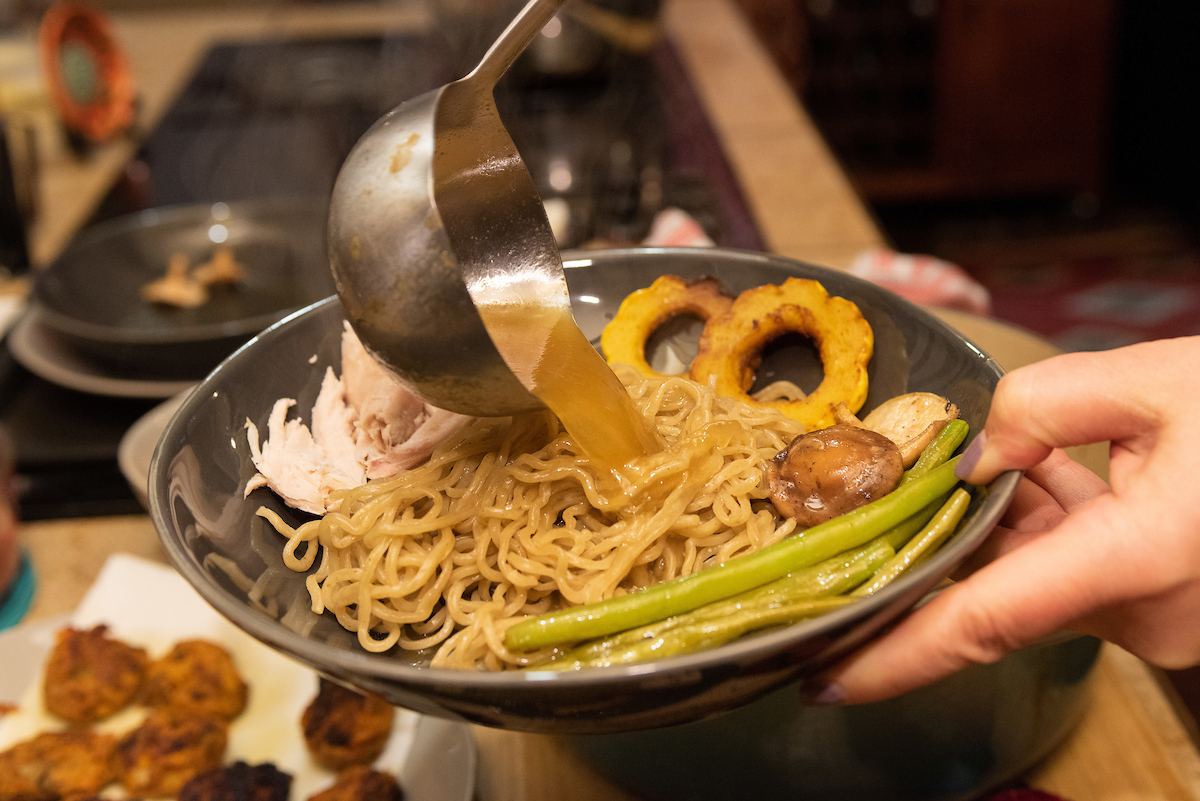
The main idea here is to use your leftovers from preparing a traditional Thanksgiving meal (Turkey, stuffing, vegetables, cranberry sauce) and make them into bowls of ramen. Using leftovers is a huge timesaver and you can make a few things fresh if necessary to round out the dish. The broth alone will astonish you.
Read moreChili Garlic Noodles

Shallots and garlic simmered in ample olive oil and then combined with fish sauce, roasted red peppers, and chilies, heaped on a pile of noodles dressed with just soy sauce, vinegar, and honey. It turns out it tastes even more luxurious and addictive than it sounds.
Read moreChris’ Khao Soi
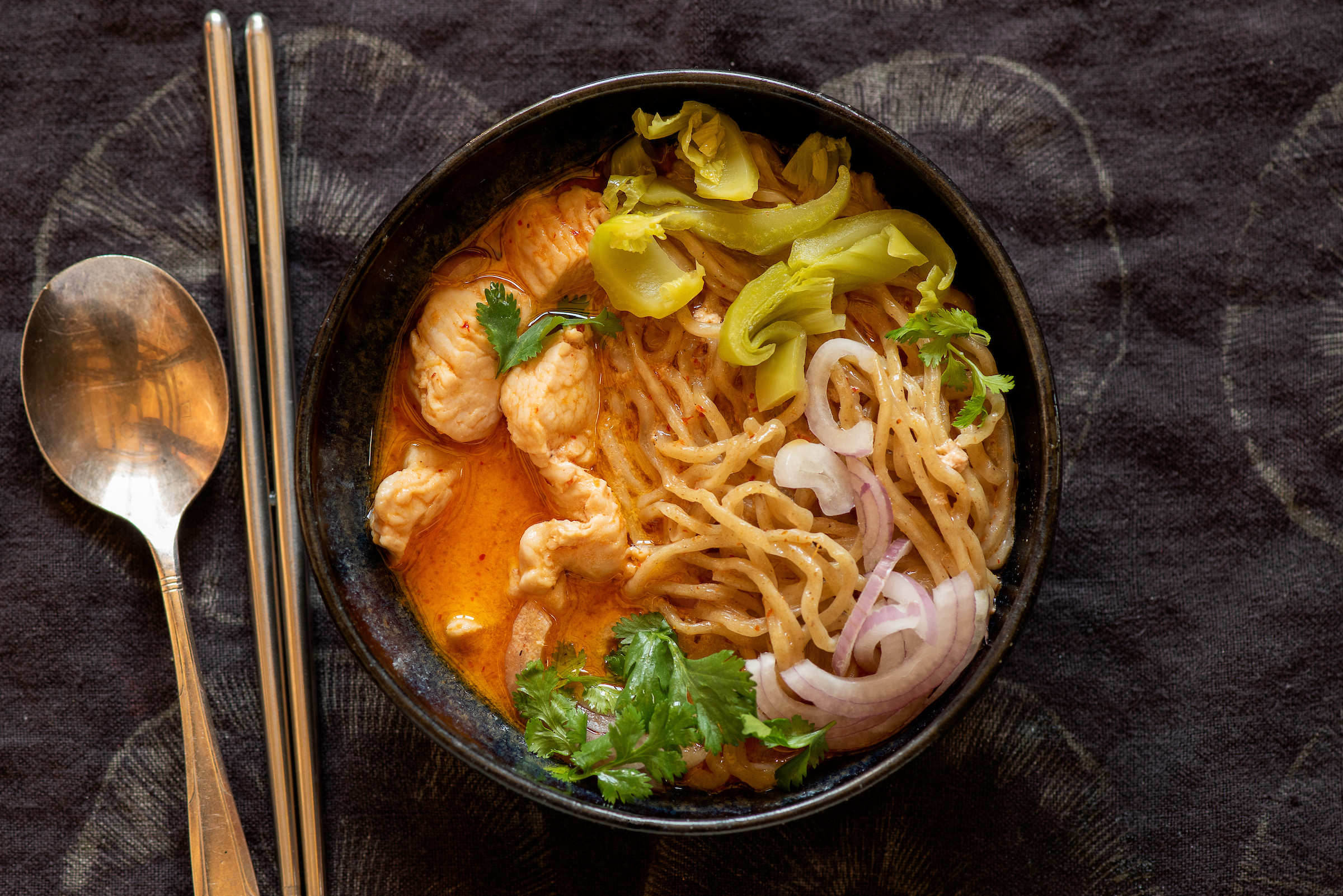
Khao Soi is ramen’s cousin in Thailand—a thick, big flavored coconut broth typically served over egg noodles with a slick of coconut oil and chicken fat, pickled mustard greens to cut the richness, fried noodles for crunch, and lime and cilantro to add a refreshing kick.
Read moreChris' Nam Prik Ong
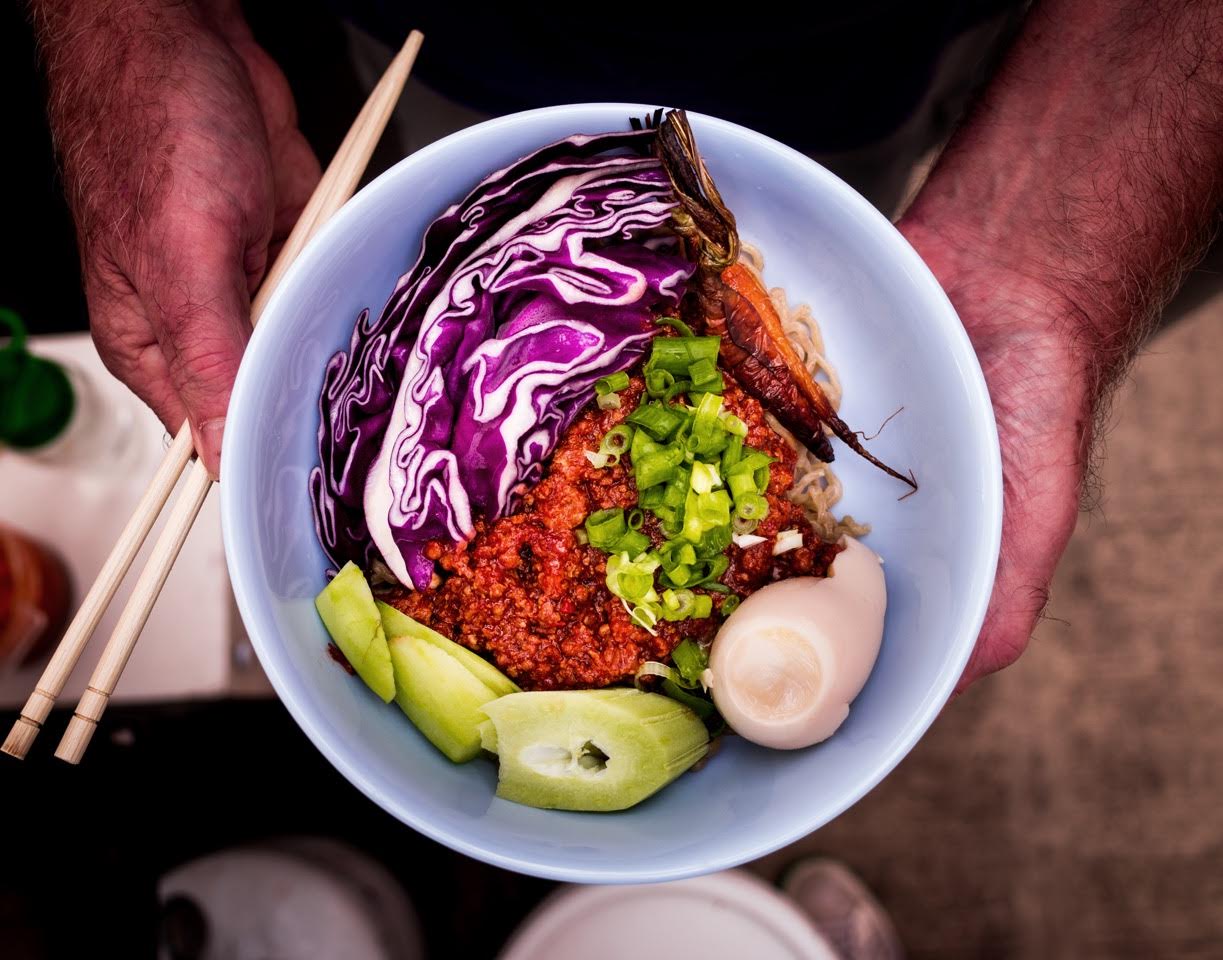
This Thai pork sauce is out of this world. The flavors are so punchy, and it has the perfect amount of heat and funk. It's reminiscent of a bolognese, built on a base of ground pork, shallot, and tomatoes, with an addictive shrimp paste and fish sauce underbelly.
Read more


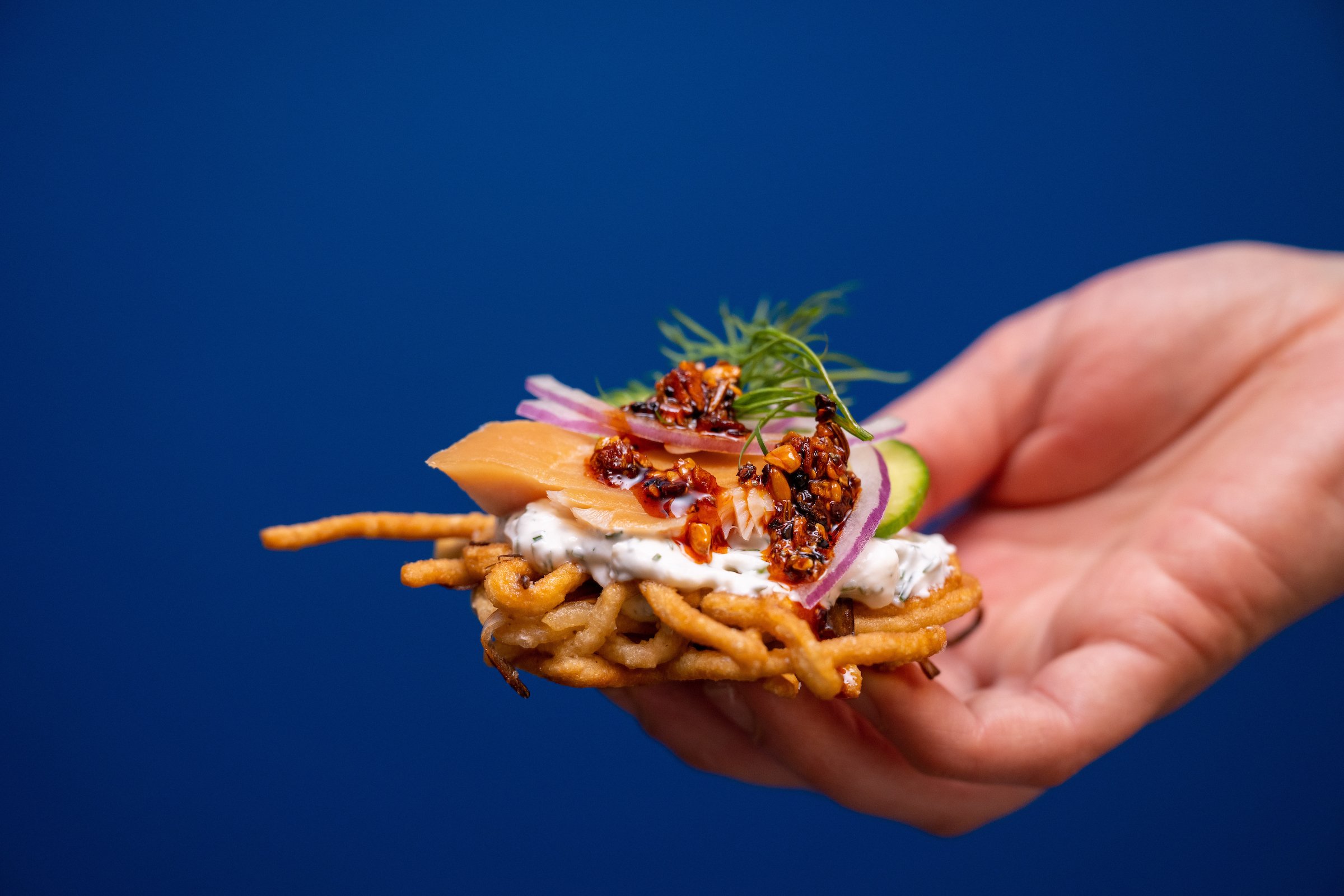

I was delighted when I experimented by using our Organic Yakisoba Sauce in place of classic Otafuku or Bulldog Okonomiyaki Sauce. It works like a dream! In fact, I insist: try it out! It’s so special!
In the Kansai region, where okonomiyaki was invented and where I lived (Kyoto, Osaka, and Kobe are all within Kansai), the ingredients are all mixed together and cooked as one mass. Many regions have their own adaptations—the other most famous style comes from Hiroshima—but the Kansai version is the easiest to make. I like to eat this with rice and miso soup.